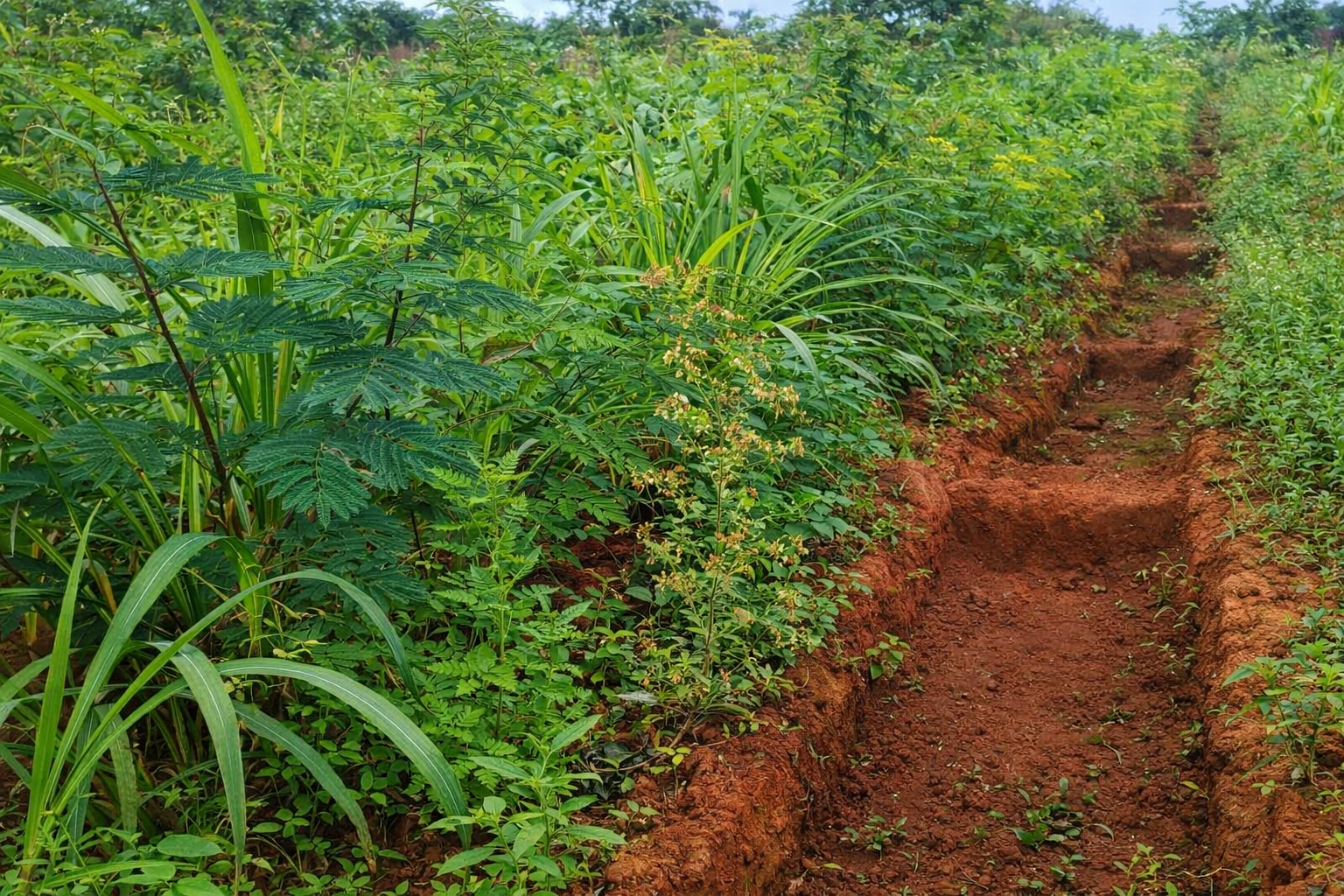
Through afforestation and reforestation, climate-smart irrigation, and disaster risk reduction initiatives, we accompany communities in protecting natural resources, strengthening ecosystems, and reducing the impacts of climate change. By working closely with local communities, we promote sustainable environmental practices that contribute to Burundi’s Vision 2040–2060 under the pillar of Sustainable Ecology and Heritage, helping build a greener and more resilient future for all.
Our approaches include:
- Afforestation and Reforestation
We support communities in restoring degraded lands through tree planting and agroforestry initiatives that improve soil fertility, enhance biodiversity, and increase agricultural productivity. At the same time, we promote environmental stewardship and sustainable natural resource management to ensure the long-term preservation of ecosystems. - Climate-Smart Irrigation
We facilitate access to affordable and sustainable irrigation solutions while promoting efficient water management practices, particularly through the use of drip irrigation systems, which enable farmers to maintain and increase agricultural production throughout the year. These interventions strengthen communities’ capacity to adapt to changing climatic conditions, reduce the effects of recurring droughts, and enhance food security and livelihoods. - Disaster Risk Reduction and Management
Working alongside communities, we promote sustainable land management practices that reduce environmental risks and strengthen resilience to climate change. Through the establishment of contour bunds (courbes de niveau), anti-erosion measures, protection of riverbanks, and watershed conservation initiatives, we support communities in preventing soil degradation, conserving water resources, and safeguarding agricultural land from erosion and flooding. These efforts contribute to improved land productivity, environmental sustainability, and stronger resilience to climate-related challenges, helping communities protect their livelihoods and natural resources for future generations.